DATE
07/10/2023
Financial Intelligence Platform
We worked on the development of Spark, an internal AI research assistant designed to support financial analysts working with large volumes of structured and unstructured financial data.
The system enables analysts to query datasets, retrieve company intelligence, analyze earnings transcripts, and extract insights from research reports through natural language interactions.
Spark was designed as a secure internal AI platform integrated with S&P Global’s financial data ecosystem, enabling faster research workflows across analysts, researchers, and financial professionals.
Enterprise Platform
Financial AI
Services
AI Product Architecture & Build
Category
Financial Intelligence Platform
Client
S&P Global
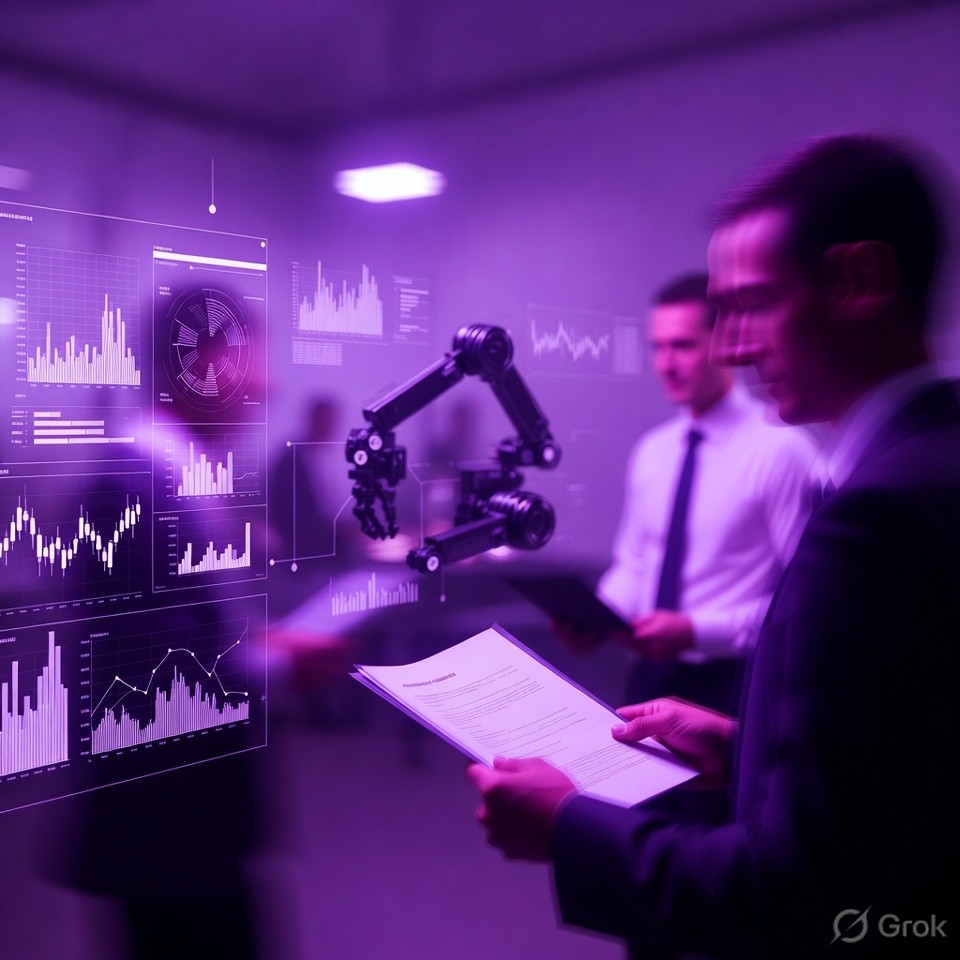
System Analysis - Data Retrieval and Knowledge Access
Financial research requires navigating large amounts of information including:
• company filings
• earnings call transcripts
• financial datasets
• analyst research reports
• macroeconomic indicators
Traditional research workflows required analysts to manually navigate multiple tools and databases.
Spark was designed to provide a single natural language interface for accessing institutional financial intelligence.
Performance
Optimized Knowledge Retrieval
Spark integrates structured financial datasets with document-based knowledge sources, enabling contextual search across:
• financial reports
• market intelligence
• analyst insights
This hybrid retrieval system ensures relevant results are surfaced quickly while maintaining accuracy.
Low Latency Query Execution
Query routing logic was implemented to identify whether requests require:
• database retrieval
• document search
• language model inference
This reduces unnecessary processing and improves response times.
Scalable Data Architecture
The system was built to support thousands of daily analyst queries across multiple financial research domains.
Reliability
Financial analysts depend on precise data access and verifiable sources.
Spark was designed with source attribution and controlled outputs to ensure responses reference original data sources such as:
• company filings
• financial datasets
• earnings transcripts
This ensures that analysts can validate AI-generated insights within their research workflows.

Problem – Fragmented Research Workflows
Before Spark, financial analysts relied on multiple tools to perform research tasks such as:
• retrieving company financials
• reviewing earnings transcripts
• searching research reports
• analyzing industry trends
This fragmentation created inefficiencies and increased the time required to generate insights.
Additionally, early AI prototypes struggled with:
• inconsistent responses
• lack of financial context
• difficulty connecting structured datasets with research documents
System Architecture Refinement
Financial Intelligence
To address these challenges, the platform architecture was redesigned to support hybrid financial intelligence retrieval.
The system pipeline was structured to include:
• structured financial database queries
• document retrieval systems
• contextual ranking mechanisms
• controlled language model outputs
This architecture allows Spark to combine quantitative financial data with qualitative research information in a single response.

Solution – Financial Intelligence Orchestration Platform
Spark operates as a layered AI platform integrating financial data infrastructure with large language models.
The system orchestrates multiple components to produce accurate research outputs.
System Integration
Integration
Spark integrates several data sources within a unified AI interface:
• structured financial datasets
• company fundamentals
• earnings call transcripts
• analyst research reports
• market intelligence databases
When analysts submit queries, the system:
interprets the research intent
retrieves relevant financial data and documents
synthesizes the information into a structured response
This enables analysts to move from data retrieval to insight generation within a single interface.
More Other cases

FAQ